
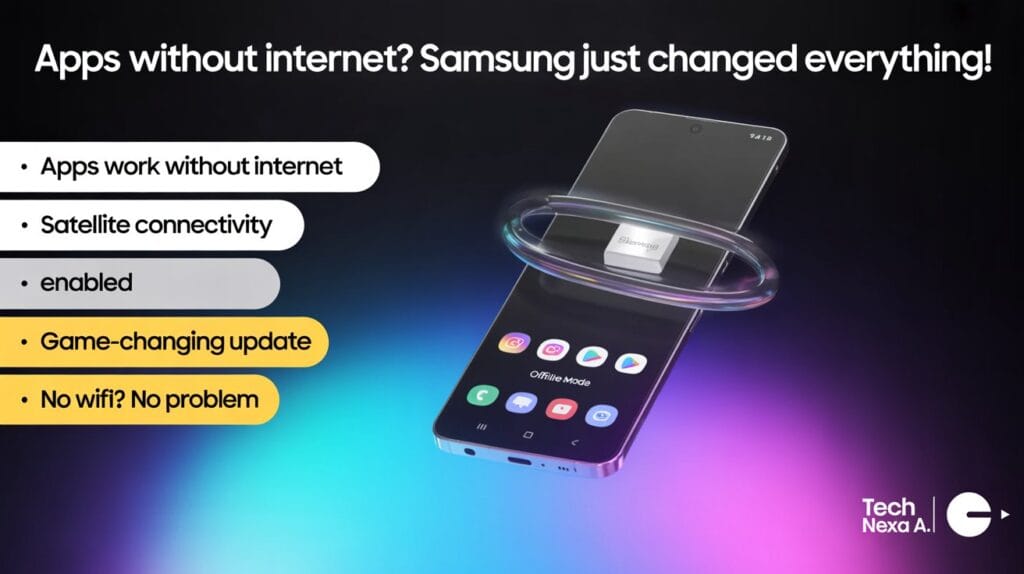
Imagine sending a WhatsApp message when your data runs out. Or posting on X while your phone shows “No Service.”
Sounds impossible, right? That’s exactly why the latest buzz around Samsung is turning heads. Reports suggest the company is working on a breakthrough that could allow certain apps — including messaging and social platforms — to function even without traditional mobile internet.
If this turns out to be as powerful as it sounds, it could quietly reshape how we think about connectivity. Sumsung
What’s Actually Happening?
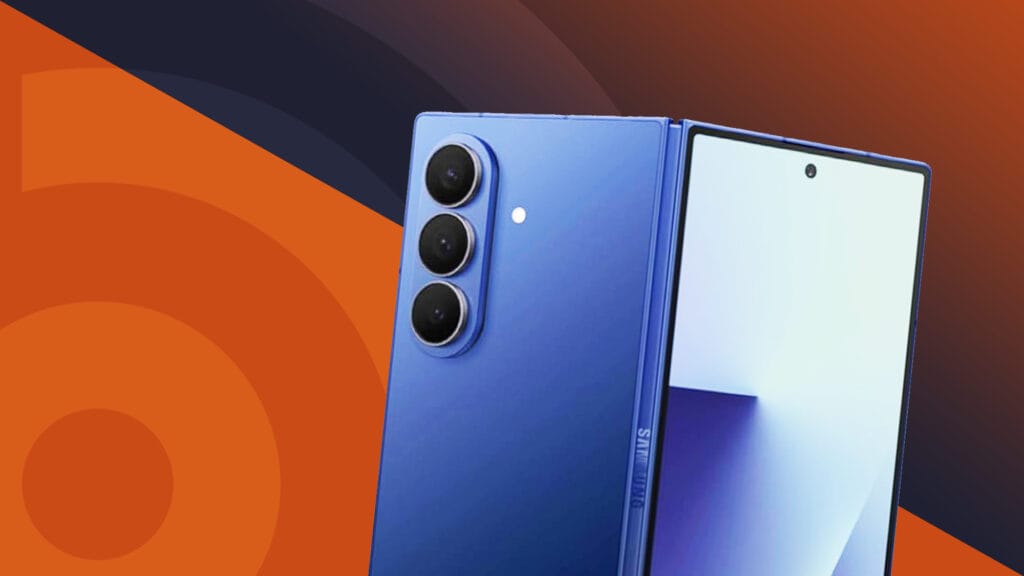
Samsung appears to be exploring next-generation communication technology that doesn’t rely solely on conventional cellular data or Wi-Fi.
The focus? Satellite-based communication and advanced offline data routing systems.
In simple terms, instead of your phone depending entirely on nearby cell towers, it could connect to satellites orbiting above Earth — or use peer-to-peer mesh-style routing — to transmit small packets of data like text messages.
We’ve already seen early versions of satellite emergency messaging in flagship smartphones. But what Samsung may be planning goes beyond emergencies.
And that’s where things get interesting. Sumsung
Why This Matters for Everyday Users
Let’s be honest — network dead zones are still a real problem in the United States.
Whether you’re driving through rural Montana, hiking in Colorado, or stuck in a stadium with overloaded networks, connectivity drops happen.
If apps like WhatsApp or X could send lightweight text updates without traditional internet, users would gain:
- More reliable messaging in remote areas
- Emergency communication without extra hardware
- Reduced dependency on expensive data plans
- Backup connectivity during outages or disasters
For travelers, outdoor enthusiasts, and even urban commuters, this could become a quiet but powerful upgrade.
What About Content Creators?

For creators, influencers, and journalists, connectivity is currency.
Breaking news doesn’t wait for signal bars to return.
If Samsung enables low-bandwidth social posting through satellite or alternative routing, creators could:
- Post updates from remote locations
- Send quick text threads during live events
- Maintain engagement during network congestion
Imagine covering a wildfire, hurricane, or major outdoor festival without worrying about signal collapse.
That’s not just convenience. That’s operational freedom.
The Technology Behind It
So how would this actually work?
There are a few possible layers involved:
1. Satellite Communication Integration
Modern smartphones can include specialized modems capable of connecting to low-Earth orbit satellites. These satellites act like floating cell towers in space.
Data transmission is slower and limited — but for text-based apps, that’s often enough.
2. Optimized Data Compression
Apps may switch into “lite transmission mode,” sending only essential text packets instead of heavy media files.
No images. No videos. Just compressed text signals.
3. Hybrid Network Switching
Phones could automatically toggle between cellular, Wi-Fi, satellite, and peer-to-peer routing depending on signal strength.
To the user, it would feel seamless.
But There Are Limitations
Let’s not get carried away just yet.
Satellite connectivity isn’t a full internet replacement. It has constraints:
- Slower speeds compared to 5G
- Higher operational costs
- Limited support for media-heavy content
- Potential subscription pricing
In other words, you won’t be streaming Netflix from a canyon anytime soon.
But sending a text? That’s realistic.
How This Could Reshape the Industry
If Samsung rolls this out broadly, competitors won’t sit still.
Apple, Google, and other Android manufacturers are already exploring satellite-enabled features. But if Samsung integrates broader app compatibility, it could pressure the entire smartphone ecosystem to follow.
Telecom carriers might also rethink pricing structures if satellite fallback becomes standard.
It’s subtle — but disruptive.
Could This Become the New Normal?
Five years ago, satellite messaging in consumer phones sounded futuristic.
Today, it’s quietly entering mainstream flagships.
The next step is expanding it beyond emergencies into everyday communication.
If Samsung succeeds, we may look back at traditional “No Internet” notifications the same way we look at dial-up tones — nostalgic, but outdated.
What Users Should Watch For
- Software updates mentioning satellite or hybrid connectivity
- New modem hardware in upcoming Galaxy devices
- Partnership announcements with satellite providers
- Messaging apps adding “low-bandwidth mode”
The rollout, if it happens, may start with flagship devices before trickling down.
Final Thoughts
This isn’t just about Samsung adding another feature to a spec sheet.
It’s about redefining what “connected” really means.
For decades, we’ve relied on towers and cables. Now, connectivity might increasingly come from the sky — quietly backing us up when the ground network fails.
And if messaging apps truly begin functioning beyond traditional internet limits, that could mark the beginning of a more resilient digital era.
FAQ
Will WhatsApp and X fully work without internet?
Most likely only text-based messaging would work initially. Media-heavy features would still require standard internet connectivity.
Do users need a new phone?
Yes, satellite-enabled features typically require specific hardware found in newer flagship devices.
Will this replace mobile data plans?
No. Satellite communication is expected to serve as a backup system rather than a full replacement for 4G or 5G.
Is this feature available now?
Details are still emerging, and availability would depend on device support and regional partnerships.
Will this cost extra?
There’s a strong possibility that extended satellite messaging could require a subscription after an initial free period.