
In kitchens across suburban America this week, something subtle is happening. Parents are asking Alexa to help draft grocery lists that actually reflect dietary preferences. College students are using it to summarize calendar changes. In a few households, early testers are having longer, more natural conversations with a device that, for years, mostly set timers and played music.
It doesn’t look dramatic. There’s no new cylindrical gadget on the counter. But behind the scenes, Amazon is attempting one of the most ambitious rebuilds in consumer tech: transforming Alexa from a scripted voice assistant into a generative AI-powered platform.
And this time, the stakes are far higher than smart home convenience.
The Long Road From Novelty to Necessity
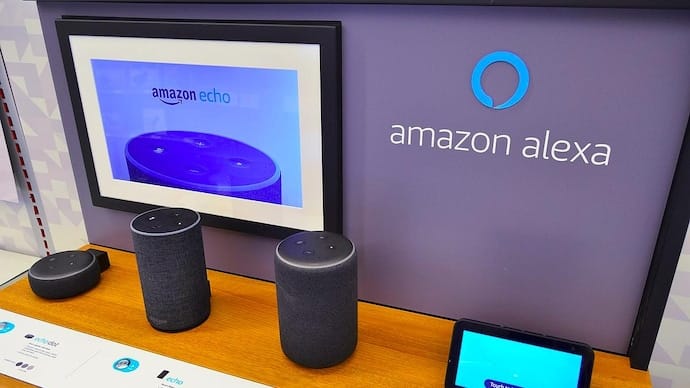
When Amazon Alexa first arrived inside the original Amazon Echo in 2014, it felt futuristic. You could ask about the weather, control lights, order paper towels. It was voice computing made approachable.
But Alexa’s early intelligence relied on predefined commands and third-party “skills.” It wasn’t conversational. It wasn’t adaptive. And it certainly wasn’t reasoning in real time.
For years, the business logic was clear: sell hardware at slim margins, lock consumers into the Amazon Prime ecosystem, and make purchasing frictionless. Voice commerce was supposed to be the killer feature.
That vision never fully materialized. Consumers were comfortable buying through screens. Voice shopping remained niche. Alexa became useful—but not indispensable.
Why Amazon Is Rebuilding Alexa Now
The generative AI boom changed everything.
When tools like ChatGPT and enterprise AI systems proved consumers were ready for more natural interactions, it exposed Alexa’s limitations. Users suddenly expected context, nuance, and memory. They wanted assistants that could reason, not just respond.
Amazon faced a crossroads: allow Alexa to become a relic of the pre-LLM era, or reinvent it from the ground up.
The company chose reinvention.
Recent upgrades signal a shift toward large language models, contextual awareness, and a more adaptive conversational engine. This isn’t just a feature update. It’s an architectural overhaul.
How the New Alexa Is Different
The next-generation Alexa aims to move beyond command-and-response patterns. Instead of “Alexa, turn on the kitchen lights,” followed by silence, users can ask multi-step questions, refine requests, and maintain conversational threads.
That requires several major changes:
- Integration of large language models for contextual responses
- Improved memory layers for follow-up interactions
- Cloud-based reasoning rather than device-only logic
- Better personalization tied to household profiles
Technically, this shifts Alexa from a deterministic system to a probabilistic one. That’s a fundamental change in how answers are generated.
It also introduces new costs, both computational and financial.
The Economics Behind the Upgrade
For years, Alexa hardware reportedly operated at a loss. Smart speakers became entry points into Amazon’s ecosystem, not profit centers.
Generative AI complicates that model. Large language models are expensive to run at scale. Each conversational query requires significant cloud resources.
That raises a serious question: Will advanced Alexa features remain free?
Industry observers expect tiered services. Basic functionality may stay included, while advanced AI capabilities could become part of subscription bundles—possibly integrated with Prime or offered as a standalone upgrade.
Amazon doesn’t have the luxury of unlimited experimentation. Shareholders expect discipline. Alexa must justify its operating costs in a more competitive AI landscape.
How This Impacts Everyday U.S. Users
For the average household, the improvements could feel incremental at first. More natural conversations. Better smart home coordination. Fewer “Sorry, I don’t know that” moments.
But the deeper value lies in task orchestration.
Imagine asking Alexa to plan a weekend trip, check weather forecasts, compare flight prices, and add reminders—without switching devices. That’s the promise of AI-native voice assistants.
For busy families, that’s meaningful. For aging users who prefer voice over screens, it’s transformative.
Still, expectations must be tempered. Even advanced AI systems struggle with factual accuracy and edge cases. Voice magnifies those limitations because there’s no visible interface to double-check.
Smart Home Control Gets Smarter—And More Complex
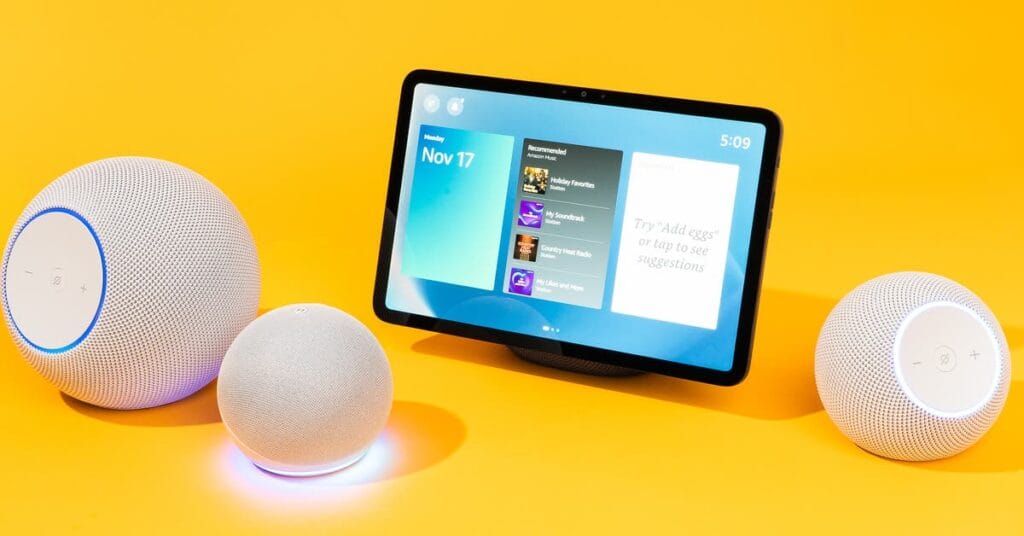
Alexa’s dominance in smart home integration remains a major advantage. Years of partnerships with lighting, thermostat, and security brands give Amazon deep ecosystem reach.
With AI-driven reasoning, Alexa could shift from simple automation (“Turn on lights at 7 p.m.”) to conditional logic (“If the house is empty and it’s past sunset, adjust lighting and thermostat automatically.”)
That moves Alexa closer to becoming a home operating system rather than a voice remote.
The risk? Complexity creep. The more powerful the system becomes, the harder it is for mainstream users to understand its boundaries.
Privacy Concerns Aren’t Going Away
Voice assistants have always carried privacy anxieties. Microphones in living rooms demand trust.
Generative AI adds another layer. Context retention and memory features require storing more conversational data. Even with encryption and anonymization, consumer skepticism remains.
Amazon must balance personalization with restraint. Overreach could trigger backlash, especially in a regulatory climate that’s increasingly cautious about AI and data collection.
Transparency will matter more than marketing.
Competition Is Fiercer Than Ever
Alexa is no longer competing solely with Google Assistant or Apple Siri. It’s competing with AI platforms that live on smartphones, laptops, and enterprise tools.
If consumers grow accustomed to opening a generative AI app for complex queries, voice assistants risk becoming secondary interfaces.
Amazon’s strategy appears to focus on embedding AI into ambient computing—making it invisible but accessible. That’s different from the chatbot-first approach dominating headlines.
Whether consumers prefer ambient AI or app-based AI remains an open question.
What Most Articles Miss
Many headlines focus on conversational upgrades. Fewer examine the strategic positioning.
Alexa gives Amazon something competitors envy: physical presence in millions of homes. That hardware footprint is a distribution channel.
If AI becomes subscription-driven, Alexa devices could become recurring revenue gateways rather than one-time hardware sales.
This isn’t just about smarter answers. It’s about converting installed base into sustainable AI economics.
Limitations Worth Watching
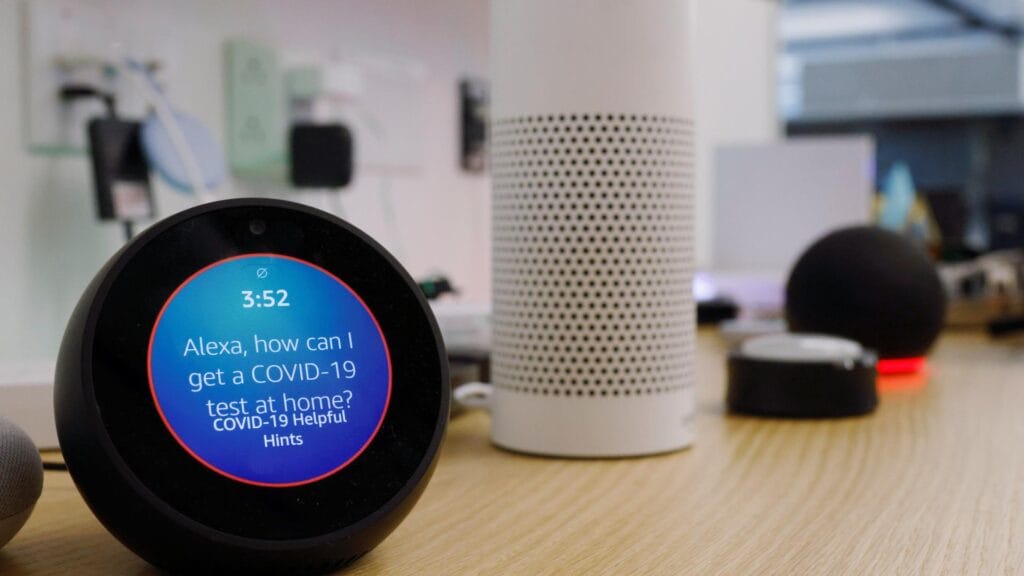
Despite upgrades, voice remains an inherently constrained interface. Complex tasks often benefit from visual feedback.
There’s also the issue of latency. Cloud-based reasoning can introduce delays, and conversational friction erodes user trust quickly.
Finally, generative AI systems can hallucinate. In a voice-only environment, incorrect answers feel authoritative. That’s dangerous if applied to health, legal, or financial advice.
Amazon will need guardrails—and clear boundaries.
The Future Outlook
Alexa’s reinvention isn’t about regaining novelty. It’s about survival in an AI-first era.
Over the next three to five years, expect tighter integration between voice, shopping, media, and home automation. Expect experiments with subscription models. Expect iterative improvements rather than flashy overhauls.
The real test won’t be whether Alexa can tell a better joke. It will be whether households rely on it daily in ways they can’t easily replace.
If Amazon succeeds, Alexa becomes infrastructure. If it fails, it becomes background noise.
FAQs
1. Will advanced Alexa AI features require a subscription?
While Amazon hasn’t finalized public pricing structures, industry signals suggest advanced generative capabilities may eventually be bundled into paid tiers. Running large language models at scale is expensive, making a purely free model unlikely long term.
2. How does the new Alexa differ technically from the original version?
Earlier versions relied heavily on rule-based systems and predefined intents. The new architecture integrates large language models capable of contextual reasoning, multi-turn dialogue, and more adaptive responses.
3. Is privacy at greater risk with AI-powered Alexa?
Potentially, yes—because enhanced personalization requires deeper contextual data. However, Amazon continues to emphasize encryption, user controls, and opt-out features. The effectiveness of those safeguards will determine consumer trust.
4. Can Alexa compete with AI chatbots on smartphones?
Alexa’s strength lies in ambient access and smart home integration, not text-based productivity. Its success will depend on leveraging home presence rather than replicating chatbot experiences.
Editorial Reflection
I’ve watched voice assistants rise from novelty to near-utility over the past decade. Alexa’s next chapter feels less flashy but more consequential.
Rebuilding a platform while it’s already deployed in millions of homes isn’t easy. It requires technical discipline, economic realism, and user trust.
Whether Alexa becomes indispensable or fades into the background won’t depend on marketing campaigns. It will depend on whether, in quiet American kitchens and living rooms, people find themselves using it—not because it’s there, but because it genuinely helps.