
Something interesting is happening in the streaming world.
Over the past few hours, “Prime Video Ultra” has started appearing in trending search results across the United States. No flashy keynote. No official announcement. Just a quiet spike in curiosity.
So what exactly is Prime Video Ultra — and why are people searching for it right now?
What Is “Prime Video Ultra” Supposed to Be?

At the moment, Amazon hasn’t formally introduced a subscription tier called “Prime Video Ultra.” But the name itself tells a story.
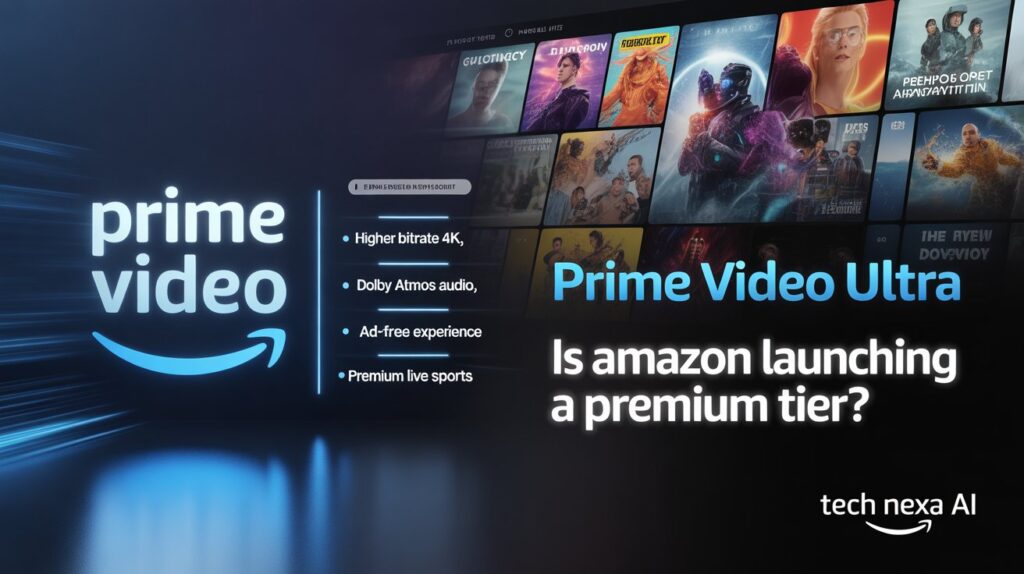
In the streaming industry, “Ultra” usually signals something premium — higher resolution, better audio, exclusive features, or expanded content libraries. Think 4K Ultra HD, Dolby Atmos, ad-free tiers, early releases, or bundled perks.
The sudden search spike suggests users may have spotted a test label, internal listing, promotional banner, or regional experiment tied to Amazon’s video platform.
And that wouldn’t be unusual.
Streaming platforms frequently test new tiers quietly before announcing them widely. Netflix did it. Disney+ did it. Even YouTube experimented with layered premium offerings before refining its plans.
Why This Matters Right Now
The timing isn’t random.
The streaming wars are entering a new phase. Growth has slowed. Profitability matters more than raw subscriber numbers. And companies are looking for ways to increase average revenue per user without losing customers.
A premium “Ultra” tier would fit that strategy perfectly.
For everyday viewers, it could mean:
- Higher bitrate 4K streaming
- Improved HDR formats
- Expanded Dolby Atmos support
- Exclusive early-access releases
- Reduced or zero ads
For creators and studios, a higher-tier offering could unlock better monetization models — especially for blockbuster films, live sports, and premium episodic content.
Amazon’s Streaming Strategy Has Been Evolving
Prime Video isn’t just another streaming app. It’s deeply integrated into the broader Amazon ecosystem.
Your Prime membership bundles shipping, music, reading perks — and video. That bundling has always been Amazon’s advantage.
But recently, the company introduced ads into Prime Video unless users pay extra. That move signaled a shift toward tiered monetization.
An “Ultra” plan could represent the next step: a clear separation between basic streaming and high-end entertainment experiences.
And let’s be honest — today’s TVs are more capable than ever. Millions of American households now own 4K OLED displays, Dolby Atmos sound systems, and high-speed fiber internet. Consumers are ready for premium quality.
How Would a Premium Tier Technically Work?
If Prime Video Ultra becomes real, here’s how it might function under the hood.
Streaming quality depends on bitrate — the amount of data transmitted per second. Higher bitrates produce sharper images, fewer compression artifacts, and richer color depth.
Most 4K streams today are compressed to balance bandwidth costs. An Ultra tier could increase bitrate ceilings, delivering closer-to-disc quality video.
On the audio side, immersive formats like Dolby Atmos require additional encoding and licensing. A premium plan could standardize Atmos across more titles instead of limiting it to select originals.
There’s also the possibility of AI-powered streaming optimization. Amazon has the cloud infrastructure (AWS) to dynamically adjust stream quality based on real-time network conditions — potentially offering smoother playback with fewer drops.
What About Sports and Live Events?

This is where things get especially interesting.
Live sports rights are becoming one of the most valuable assets in streaming. Amazon already streams NFL games in the U.S. If an Ultra tier includes enhanced sports features — multi-angle viewing, real-time stats overlays, higher frame rates — that would be a major differentiator.
Imagine watching Thursday Night Football in higher bitrate 4K with zero ad interruptions. That’s the kind of feature that gets people talking.
Is This Just a Test?
It’s entirely possible.
Search trends often spike when internal labels surface accidentally or when limited beta programs roll out quietly. Sometimes a name trends before the product officially exists.
But even if “Prime Video Ultra” doesn’t launch exactly as imagined, the trend reveals something bigger: audiences are actively looking for better streaming experiences.
That demand alone is a signal.
What It Means for the Streaming Industry
If Amazon introduces a true Ultra tier, competitors won’t sit still.
We could see:
- Higher-tier 4K+ plans from competitors
- Expanded spatial audio adoption
- AI-enhanced upscaling becoming standard
- More aggressive bundling strategies
The future of streaming may split into three clear lanes:
Ad-supported budget tiers. Standard mid-level plans. And premium “Ultra” experiences designed for enthusiasts.
In other words, streaming could start looking more like cable once did — but smarter, more customizable, and cloud-powered.
Should You Be Excited?
If you’re watching on a 1080p TV with basic speakers, maybe not yet.
But if you’ve invested in a high-end home setup, crave better picture quality, or hate compression artifacts during dark scenes — this could be meaningful.
For creators and studios, higher tiers mean potential revenue growth. For Amazon, it means deeper monetization without abandoning its Prime ecosystem.
And for the industry? It signals the next stage of competition.
Prime Video Ultra might just be a trending search term today.
But it could represent the beginning of a premium streaming reset.
FAQ: Prime Video Ultra
Is Prime Video Ultra officially announced?
No official announcement has been made yet. The term is currently trending in search results, suggesting possible testing or early discovery.
Will Prime Video Ultra cost extra?
If introduced, it would likely be a premium add-on tier with enhanced features, similar to other streaming platforms’ high-end plans.
What features might be included?
Potential features could include higher bitrate 4K, Dolby Atmos support, ad-free streaming, enhanced sports viewing, and exclusive content access.
How is this different from regular Prime Video?
Regular Prime Video is bundled with Prime membership. An Ultra tier would likely focus on higher quality streaming and premium experiences beyond the standard offering.
When could it launch?
There’s no confirmed launch date. If it’s in testing, a broader announcement could come later this year.