
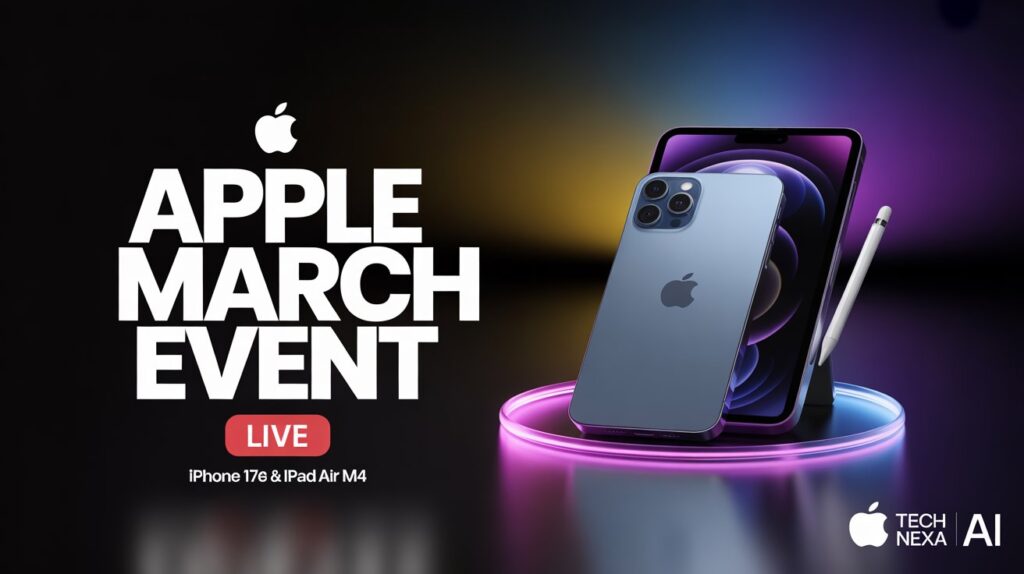
Apple’s spring events are usually predictable. A few spec bumps. A quiet refresh. Maybe a new color.
This year? It felt different.
Instead of one headline product, Apple rolled out three: the iPhone 17e, a brand-new MacBook Neo, and an updated iPad Air. And taken together, they reveal something bigger than incremental upgrades. They show where Apple thinks the mainstream market is headed next.
The iPhone 17e: Affordable, But Not Basic

Let’s start with the device most people will care about first — the iPhone 17e.
The “e” branding signals what Apple has been experimenting with for years: delivering flagship-level performance without flagship-level pricing. Think of it as the spiritual successor to the more budget-conscious iPhone models, but reimagined for a performance-first audience.
The 17e is powered by Apple’s latest in-house silicon, delivering faster on-device AI processing, smoother gaming performance, and improved battery efficiency. For everyday users, that translates to quicker app launches, smarter photo processing, and better longevity over time.
The camera system also gets meaningful upgrades. Enhanced computational photography improves low-light shots, while AI-driven image tuning sharpens detail without oversaturating colors. For content creators posting daily to TikTok, Instagram, or YouTube Shorts, that matters.
It’s not just a cheaper iPhone. It’s Apple making performance more accessible.
MacBook Neo: Apple’s Most Strategic Laptop Move in Years?
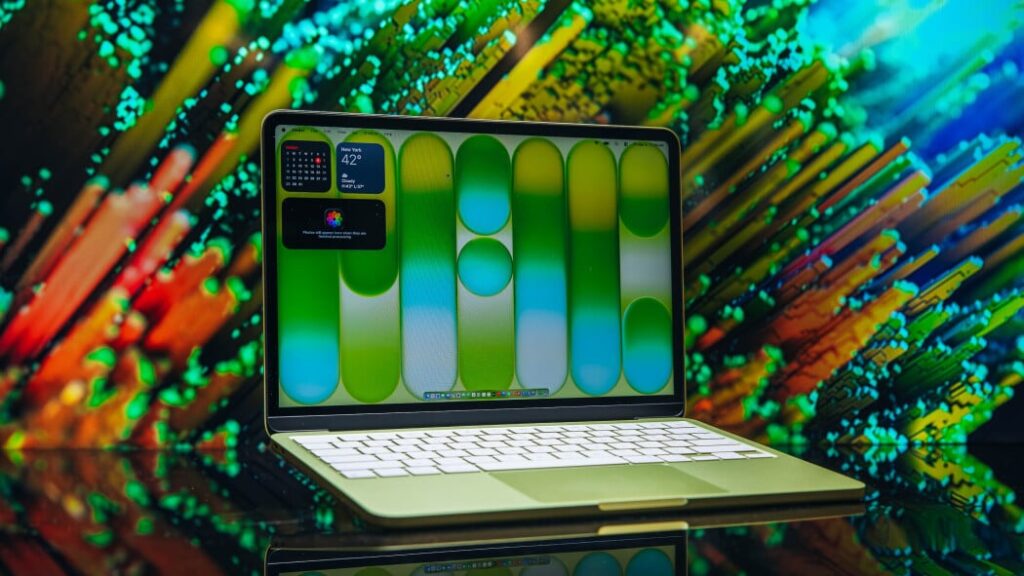
If there was a surprise star of the event, it might be the MacBook Neo.
Apple positioned it as a fresh entry point into the Mac ecosystem — lighter than traditional MacBook Pro models but more powerful than older entry-level machines.
The Neo runs on Apple’s latest generation silicon, optimized for AI workloads and battery efficiency. That means smoother multitasking, faster rendering, and silent performance without aggressive fan noise.
For U.S. students, remote workers, and creators on the go, the Neo feels like Apple acknowledging a simple truth: not everyone needs a $2,000 machine, but they still want premium performance.
Battery life reportedly stretches comfortably into all-day territory. And with macOS continuing to integrate deeper AI capabilities — from on-device search enhancements to smarter automation tools — the Neo becomes more than just a laptop. It becomes a productivity engine.
This could be Apple’s play to expand its Mac user base in a big way.
iPad Air: The Quiet Upgrade That Makes Sense
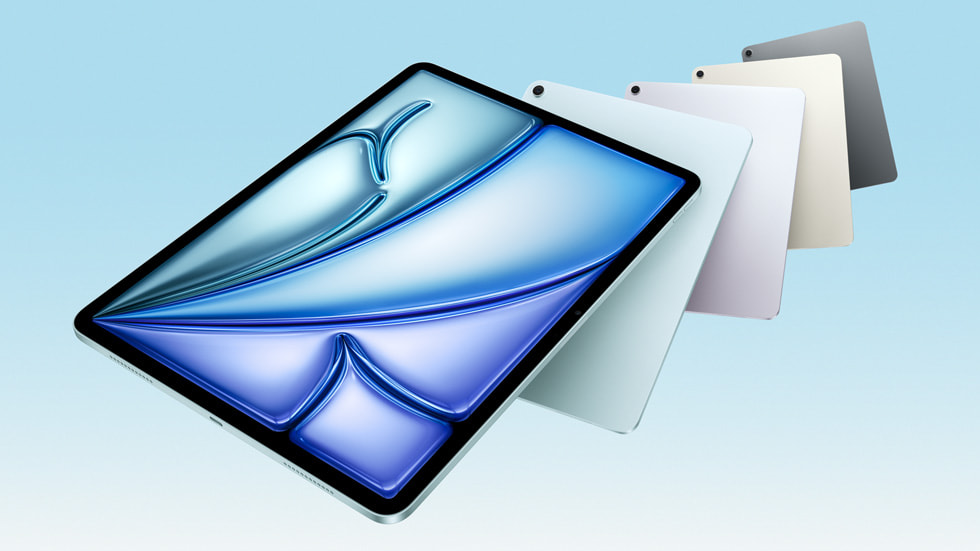
The new iPad Air didn’t arrive with dramatic fanfare. But sometimes the most practical upgrades are the most impactful.
With improved display brightness, a faster chip, and enhanced Apple Pencil support, the refreshed iPad Air strengthens its position as the “do-it-all” tablet in Apple’s lineup.
For students in the U.S., the iPad Air continues to hit a sweet spot. It’s powerful enough for creative apps, video editing, and multitasking — yet more affordable and lighter than the iPad Pro.
And with Apple steadily improving its tablet software experience, the Air increasingly feels like a legitimate laptop alternative for light-to-moderate workloads.
Why This Event Matters for Everyday Users
Apple’s March lineup signals a broader shift.
Instead of focusing solely on ultra-premium devices, Apple is strengthening its mid-tier ecosystem. That’s important because inflation-conscious consumers are more selective than ever.
The iPhone 17e offers flagship-like performance without the Pro price. The MacBook Neo lowers the barrier to Mac ownership. The iPad Air becomes more versatile without crossing into Pro territory.
This strategy makes Apple’s ecosystem more accessible — and that could expand its footprint across the U.S. market.
How AI Is Quietly Driving These Devices
Under the surface, artificial intelligence plays a larger role than Apple explicitly markets.
Modern Apple silicon is built with dedicated neural engines designed to handle AI tasks directly on the device. That means:
- Smarter photo enhancement
- Real-time voice transcription
- Faster predictive typing
- Improved battery optimization
- Advanced on-device security processing
This matters because privacy remains a key differentiator for Apple. On-device AI reduces reliance on cloud processing, keeping more data local.
For U.S. consumers increasingly aware of digital privacy concerns, that’s not a small detail.
Content Creators Should Pay Attention
The 17e’s camera upgrades, the Neo’s performance boost, and the iPad Air’s creative flexibility form a powerful trio for creators.
Short-form video production. Podcast editing. Graphic design. Note-taking and ideation. All possible without jumping to the highest-end devices.
This could democratize content creation even further. When powerful tools become slightly more affordable, creativity scales.
The Bigger Industry Picture
Apple’s March strategy sends a message to competitors.
The battle isn’t just about premium devices anymore. It’s about offering compelling mid-range hardware that still feels aspirational.
In a smartphone and laptop market that has matured significantly, differentiation now depends on ecosystem strength, AI integration, and long-term software support.
And Apple continues to double down on all three.
What This Could Mean for the Future
If the iPhone 17e and MacBook Neo perform well, we may see Apple lean harder into this tiered approach — flagship innovation at the top, broad accessibility just beneath it.
That could reshape pricing expectations across the industry.
Because when Apple redefines the mid-range, competitors usually respond.
And consumers? They win.
Frequently Asked Questions (FAQ)
What is the iPhone 17e?
The iPhone 17e is Apple’s latest performance-focused model designed to deliver strong processing power and camera upgrades at a more accessible price point than Pro models.
What makes the MacBook Neo different?
The MacBook Neo is positioned as a lighter, more affordable Mac option powered by Apple’s latest silicon, targeting students and everyday productivity users.
Is the new iPad Air worth upgrading?
If you use your tablet for multitasking, creative apps, or note-taking, the improved performance and display enhancements make it a compelling upgrade.
Do these devices support advanced AI features?
Yes. Apple’s latest chips include neural engines that handle AI tasks such as image processing, voice recognition, and system optimization directly on the device.
When will these products be available in the United States?
Availability typically follows shortly after announcement, with pre-orders opening first and retail launches soon after through Apple’s online store and authorized retailers.