
Something unusual is happening in study rooms across America.
Students aren’t just using AI to summarize notes or explain calculus anymore. They’re feeding it past exam papers and asking a bigger question: What is my professor likely to ask next?
Not cheating. Not copying answers. But analyzing patterns.
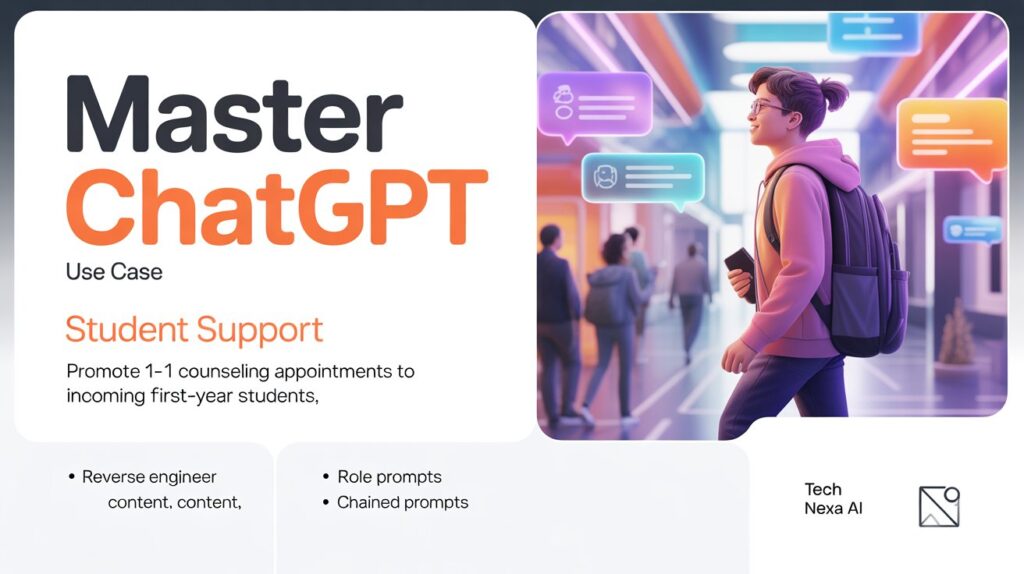
A viral post circulating on X claims students are now using ChatGPT to “reverse-engineer” exams through prompt-driven pattern analysis. The idea is simple — if tests follow trends, why not train AI to spot them?
And suddenly, the conversation about AI in education just got more complicated.
From Homework Helper to Exam Strategist
For most of the past two years, the debate around AI tools like ChatGPT has focused on plagiarism and academic integrity. Can students use it? Should they? Where’s the line?
But this new use case feels different.
Instead of asking the AI to write essays or solve equations directly, students are uploading 3–5 past exam papers and instructing it to identify recurring topics, weight distribution, common question formats, and conceptual trends.
In other words, they’re treating ChatGPT like a data analyst.
And technically, that’s not cheating. It’s pattern recognition.
How “Reverse Engineering” an Exam Works
The process isn’t magic. It’s statistical reasoning powered by language models.
Students provide historical exam content and prompt the AI to:
- Identify frequently tested topics
- Detect repeat question structures
- Analyze difficulty distribution
- Highlight overlooked concepts
- Predict likely emphasis areas
Large language models excel at pattern detection across text. They don’t “predict the future,” but they can identify trends in structured information.
If, for example, a biology professor consistently emphasizes cellular respiration pathways every spring semester, the AI will likely flag that pattern.
It’s not guessing. It’s probability mapping.
Why This Matters for U.S. Students
In the United States, standardized testing culture runs deep. From AP exams to university midterms and professional certifications, assessment patterns are often structured and repeatable.
Students have always analyzed past papers. What’s new is the speed and depth AI brings to that analysis.
Instead of spending hours manually comparing exams from different years, ChatGPT can surface structural insights in seconds.
For high-pressure environments — law school, medical programs, engineering majors — that efficiency is powerful.
But it also raises questions. If AI becomes a strategic exam predictor, does preparation shift from mastering content to mastering prompt engineering?
Educators Are Paying Attention
Professors and administrators are already navigating AI’s role in classrooms. This development adds another layer.
Because technically, analyzing past exams has always been encouraged. It’s a classic study strategy.
The difference now is scale.
AI can detect subtle structural biases humans might miss. If exams unintentionally follow predictable frameworks, instructors may need to diversify assessment methods.
This could push academia toward more application-based testing, oral assessments, real-time problem solving, and adaptive question pools.
In other words, AI may indirectly reshape how exams are designed.
Is This Ethical?
Here’s where things get nuanced.
Using AI to analyze patterns in publicly available past papers is not the same as accessing leaked questions. It’s closer to using a high-powered calculator for study planning.
But institutions may vary in policy. Some universities restrict AI use entirely for academic preparation.
The ethical boundary likely depends on transparency and intent.
Are students using AI to understand concepts better — or to game predictable systems?
The answer probably varies from campus to campus.
Why This Is Bigger Than Exams

This trend signals something larger about how AI is evolving in everyday life.
We’re moving beyond AI as a content generator. It’s becoming a strategic thinking assistant.
Students aren’t just asking for answers. They’re asking for meta-analysis.
That shift mirrors broader industry adoption. Businesses use AI for forecasting. Marketers use it for audience trend detection. Financial analysts use it for pattern modeling.
Now students are doing the same — in academic settings.
Practical Benefits — and Real Limitations
Used responsibly, this method offers advantages:
- Better time allocation when studying
- Clearer understanding of high-weight topics
- Reduced anxiety through structured preparation
- Improved strategic revision planning
But it’s not foolproof.
Professors can change formats without warning. Overreliance on prediction may create blind spots. And AI analysis depends entirely on the quality and quantity of input data.
No historical data? No meaningful pattern.
And of course, mastery of subject matter still matters. AI can highlight trends, but it can’t replace comprehension.
What This Could Mean for the Future of Education

If AI-assisted pattern analysis becomes mainstream, testing culture may evolve.
We may see:
- More dynamic question banks
- Increased oral and project-based evaluations
- Greater emphasis on real-time reasoning
- Less reliance on predictable exam structures
Ironically, AI might push education toward deeper learning rather than rote memorization.
Because once prediction tools become common, the advantage shifts back to genuine understanding.
And that may not be a bad thing.
The Bottom Line
Students using ChatGPT to reverse-engineer exams isn’t a dystopian headline.
It’s a reflection of how tools evolve.
Calculators changed math education. Search engines changed research. AI is now changing strategy.
The real question isn’t whether students will use AI.
It’s how schools, educators, and policymakers will adapt to a generation that sees artificial intelligence not as a shortcut — but as a study partner.
Frequently Asked Questions (FAQ)
Is using ChatGPT to analyze past exams considered cheating?
Not necessarily. Analyzing publicly available past papers for patterns is similar to traditional study methods. However, students should always check their institution’s AI policies.
Can ChatGPT accurately predict exam questions?
ChatGPT cannot predict specific future questions. It can identify trends and recurring themes based on past data, but results are probabilistic, not guaranteed.
Do universities in the United States allow AI for studying?
Policies vary widely by institution. Some allow AI for brainstorming and analysis, while others restrict its use in academic contexts. Students should review official guidelines.
How does AI identify patterns in exams?
Large language models analyze recurring words, structures, topic frequency, and contextual relationships across multiple documents to surface trends.
Will this change how exams are designed?
Possibly. If AI-driven pattern analysis becomes widespread, educators may shift toward more dynamic and application-focused assessments to reduce predictability.