
Google AI Search Confuses 2027 Date Logic and what looked like a simple calendar question has now turned into a serious conversation about AI reliability. In the United States, where millions rely on Google’s AI Overviews daily, this error is raising eyebrows across the tech industry.
Google AI Search Confuses 2027 Date Logic: What Exactly Happened?
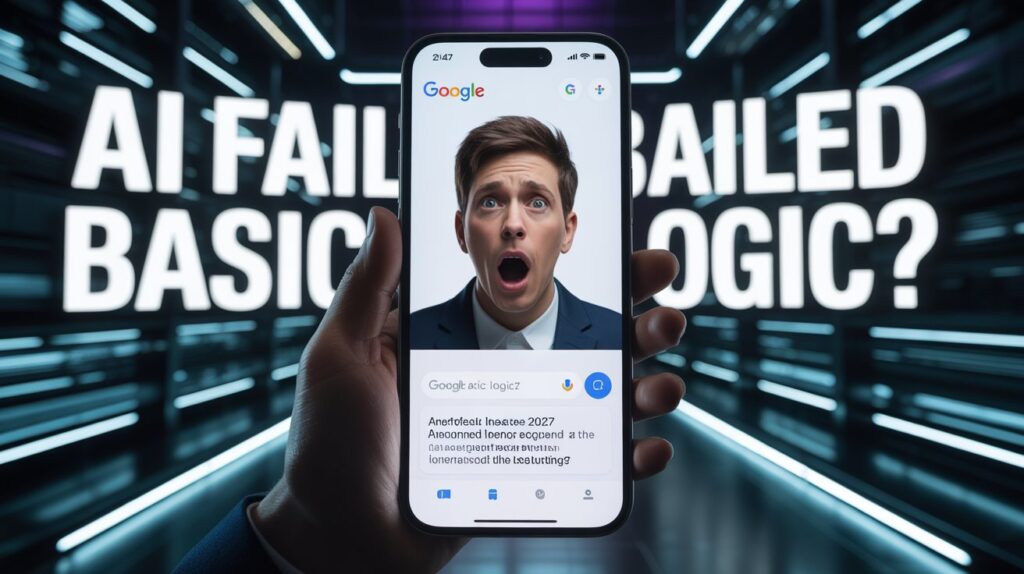
Google AI Search Confuses 2027 Date Logic when users asked a basic question: “Is 2027 next year?” Instead of giving a clear answer, Google’s AI Overview contradicted itself by stating that 2027 is not next year, then listing timelines that confused users even further.
For US users, this wasn’t just funny — it was concerning. AI is supposed to simplify information, not complicate it.
Google AI Search Confuses 2027 Date Logic and Social Media Explodes
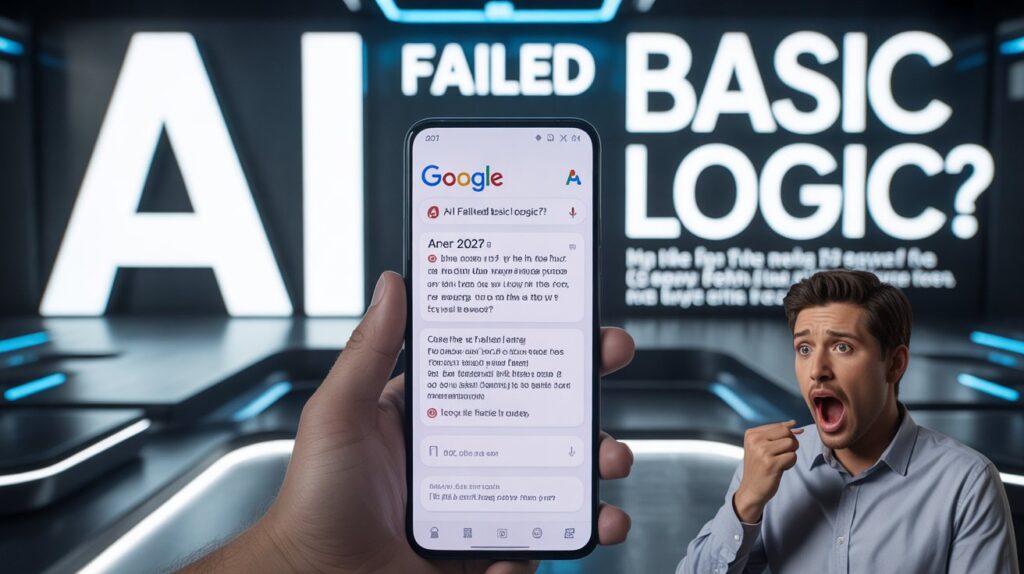
Google AI Search Confuses 2027 Date Logic became a trending topic on X (formerly Twitter). Influencers, tech journalists, and even industry leaders mocked the mistake, calling it “Artificial Idiocy” instead of Artificial Intelligence.
One viral post pointed out how an AI system with access to real-time data still failed at basic date reasoning.
Why This Error Matters More Than It Seems
Google AI Search Confuses 2027 Date Logic is not just a meme-worthy error. In the US, AI-powered search is being used for:
- Financial planning
- Academic research
- Legal information
- Health-related queries
If AI can’t handle calendar logic, users are now questioning what else it might get wrong.
Google AI Search Confuses 2027 Date Logic Due to Training vs Real-Time Reasoning
Google AI Search Confuses 2027 Date Logic partly because AI models rely heavily on trained data patterns rather than true reasoning. While Google promotes AI Overviews as “smart summaries,” they still lack genuine understanding.
This problem echoes a similar issue in 2025 when Google’s AI mixed up current and future years — proving this is not a one-time glitch.
AI Overviews vs Human Logic
Google AI Search Confuses 2027 Date Logic highlights the gap between human common sense and AI logic. Humans instantly know how years progress. AI, however, processes probability-based responses.
google ai search confused
That difference can lead to embarrassing — and risky — mistakes.
Impact on Google’s Trust in the United States
Google AI Search Confuses 2027 Date Logic at a time when US regulators are closely watching AI accuracy and misinformation. Trust is everything, and small errors can snowball into credibility issues.
For content creators, bloggers, and businesses in the US, this raises another concern: Should AI-generated answers be trusted for SEO and content decisions?
What This Means for SEO and Discover Feed
Google AI Search Confuses 2027 Date Logic also impacts publishers. If AI summaries are wrong, users may stop clicking original articles — or worse, believe incorrect information.
This strengthens one thing: high-quality human-written content still matters.
Google AI Search Confuses 2027 Date Logic and the Future of AI Search

Google AI Search Confuses 2027 Date Logic may act as a wake-up call. Google will likely improve real-time reasoning, but until then, users should double-check AI answers.
In the US market, where AI adoption is massive, even small logic failures can slow down trust in AI-powered search.
How Users Can Stay Safe
- Verify AI answers manually
- Check multiple sources
- Rely on expert-written articles
- Avoid blind trust in AI summaries
Final Thoughts: AI Is Powerful, But Not Perfect
Google AI Search Confuses 2027 Date Logic proves one thing clearly — AI is still evolving. While it can process massive data, basic reasoning errors remind us that human oversight is still essential.
For US users, creators, and businesses, this incident is a reminder: AI should assist decisions, not replace human judgment.
FAQs
Why did Google AI get the 2027 date wrong?
Because AI relies on pattern-based training and sometimes struggles with real-time logical reasoning.
Is Google AI Search reliable for important decisions?
It’s helpful, but users should always verify information from trusted sources.
Has Google responded to this issue?
As of now, Google has not released an official statement addressing this specific error.
Can AI Overviews affect SEO traffic?
Yes, incorrect AI summaries can reduce clicks or spread misinformation.
Will Google fix these AI logic issues?
Most likely yes, as AI systems improve continuously with feedback and updates.