
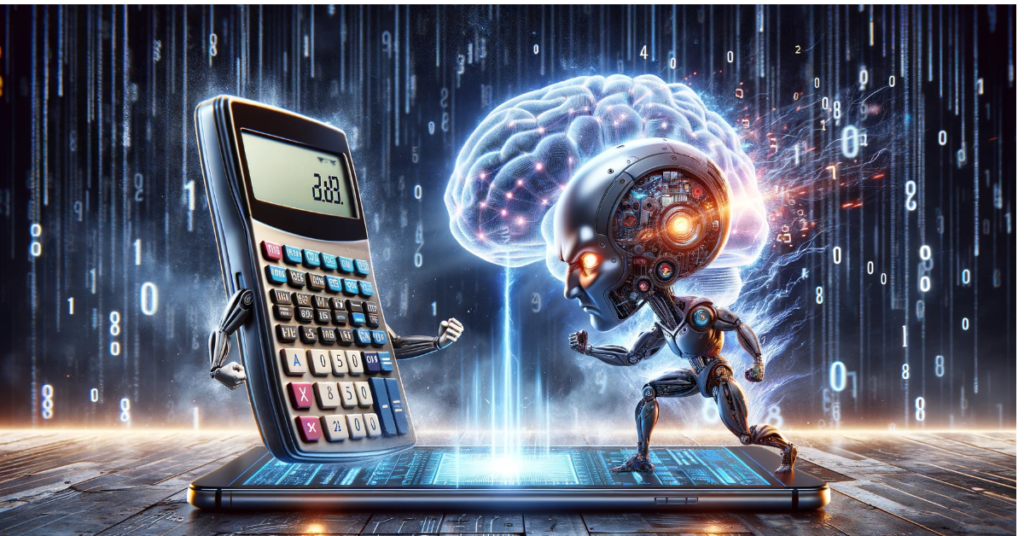
Artificial Intelligence is often misunderstood. Many people assume AI works like a calculator—input data, get an exact output. But this assumption is incorrect. AI is not like a calculator, and understanding this difference is crucial in today’s AI-driven world.A calculator follows fixed rules. AI, on the other hand, learns, adapts, and makes probabilistic decisions. In this article, we’ll explore five key reasons why AI operates very differently from a calculator and why this distinction matters for users, businesses, and the future of technology.
AI Learns, Calculators Only Follow Rules
A calculator is rule-based. Every operation produces the same result, every time.
AI systems use machine learning models that improve over time. They analyze patterns, learn from data, and refine responses based on experience.AI Is Not Like a Calculator
Key difference:
Calculator: Fixed logic
AI: Learns from data and feedback
This learning ability proves that AI is not like a calculator in real-world applications.
AI Handles Uncertainty, Calculators Do Not
Calculators deal with absolute certainty. Two plus two will always equal four.
AI works in uncertain environments. It predicts outcomes using probabilities rather than fixed answers. This is why AI can:
Recommend content
Detect spam
Predict user behavior
This decision-making intelligence allows AI to operate where calculators completely fai
AI Understands Context and Meaning