
What if your map could actually think with you?
Not just give directions. Not just show traffic. But understand what you’re asking — the way a person would.
That’s the shift Google is betting on.
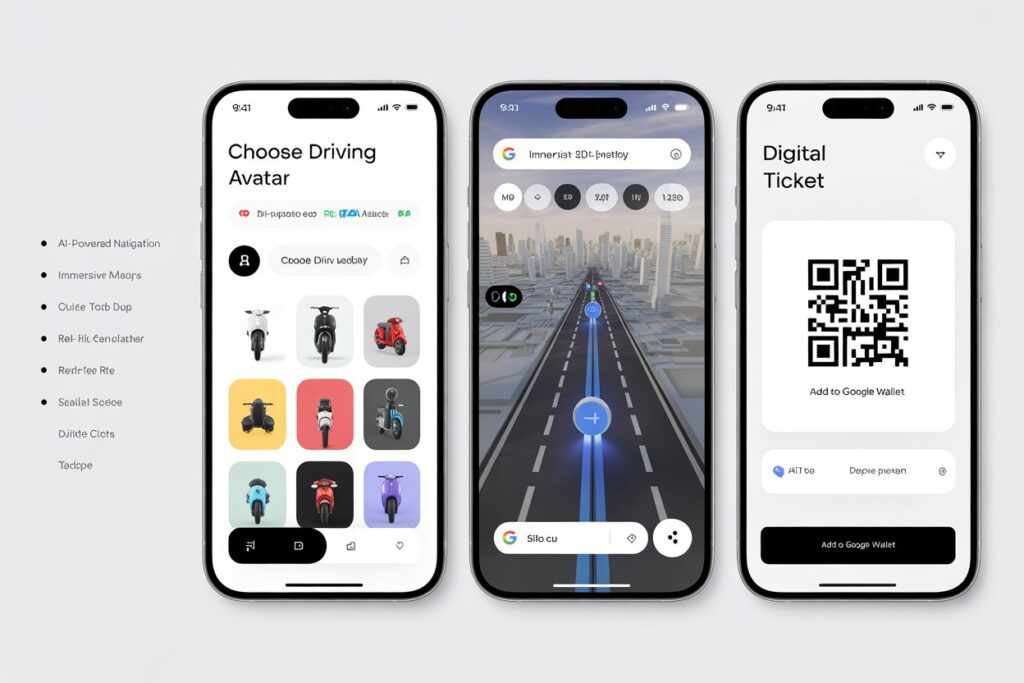
Google Maps has received its most significant overhaul in more than a decade, and this time, it’s powered by AI. At the center of the update is something called Ask Maps — a conversational layer built using Google’s Gemini models — along with immersive, almost cinematic navigation features.
This isn’t a small tweak. It’s a rethink of how we interact with digital maps.
From Search Bar to Conversation

For years, using Google Maps meant typing in a location and choosing a route. Efficient? Yes. Intelligent? Not really.
Now, you can ask questions like:
- “What are the best scenic stops on a road trip from LA to San Francisco?”
- “Find cozy coffee shops open right now with outdoor seating.”
- “Where can I play tennis tonight with lights on?”
Instead of just pulling up static listings, Maps now interprets context. It understands intent.
That’s a major difference.
Why This Matters for Everyday Users
Let’s be honest — most people don’t think about map apps until they’re lost, late, or hungry.
But this update shifts Maps from a navigation tool into a decision-making assistant.
Planning a weekend getaway? Ask Maps can suggest stops based on photos, reviews, popularity trends, and even vibe. Looking for something specific, like a “quiet brunch spot with natural light”? The AI processes billions of user photos and reviews to refine results.
In short: less scrolling. Fewer tabs. Faster answers.
For U.S. users who rely on Google Maps daily — whether commuting in New York, road-tripping through Arizona, or exploring small-town diners — this could save serious time.
Immersive Navigation Feels Almost Real
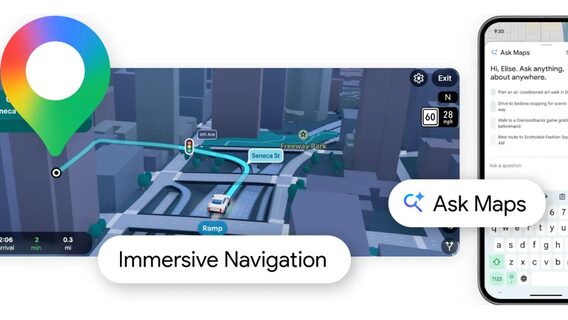
The second part of the update is just as interesting.
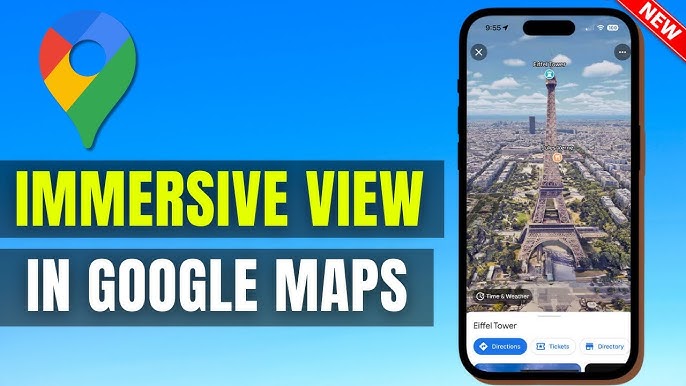
Immersive navigation blends AI, Street View data, and satellite imagery to create a more realistic preview of routes and destinations. You can see weather overlays, traffic density, and building visuals before you even leave home.
Imagine checking what a neighborhood looks like at sunset before booking a dinner reservation.
That’s the kind of practical enhancement Google is aiming for.
The AI Engine Behind It All
This transformation is powered by Gemini — Google’s latest generation of AI models.
Unlike older keyword-based systems, Gemini processes language contextually. It doesn’t just match words. It interprets meaning.
When you ask for “family-friendly hiking trails near Denver that aren’t too crowded,” the AI weighs distance, difficulty, popularity data, reviews, photos, and even time-of-day patterns.
That requires enormous data processing — something only a company with Google’s infrastructure can realistically handle at scale.
What This Means for Creators and Businesses
This update isn’t just about users.
It changes how local businesses are discovered.
Restaurants, shops, and attractions with strong visual content and detailed reviews may now rank higher in conversational queries. That puts new importance on high-quality images, accurate listings, and engaging descriptions.
For travel creators and influencers, the AI-powered discovery layer could influence which spots trend — and which get overlooked.
In a way, Maps is becoming a recommendation engine, not just a routing tool.
Key Features at a Glance
- Ask Maps conversational AI search
- Context-aware recommendations
- Immersive route previews
- Weather and traffic overlays
- Smarter local business discovery
Are There Any Limitations?
AI isn’t perfect.
Context-based answers depend heavily on existing user data. In rural areas or less-reviewed regions, results may still feel limited.
There’s also the broader privacy conversation. Anytime AI analyzes massive volumes of user-generated content, questions about data handling and transparency naturally follow.
Google says it draws from publicly available reviews and photos, but as AI becomes more integrated into everyday tools, scrutiny will likely increase.
The Bigger Picture: Maps as an AI Platform
This update hints at something larger.
Maps is no longer just a navigation app. It’s becoming an AI-powered exploration platform.
And that has implications beyond directions.
As conversational AI becomes embedded into search, email, productivity tools, and now maps, we’re watching interfaces shift from commands to conversations.
The real question is: will users adapt quickly enough?
History suggests they will.
Voice search once felt futuristic. Now it’s normal. Chatbots once seemed experimental. Now they’re embedded everywhere.
Maps may be next.
What It Could Mean for the Future
If this rollout succeeds, expect deeper integrations.
Think calendar syncing for trip planning. Smarter restaurant reservations. Real-time AI trip optimization during travel.
Navigation could evolve from reactive (“turn left in 200 feet”) to proactive (“traffic ahead — here’s a better scenic route”).
That’s where this is heading.
Google isn’t just updating Maps. It’s redefining how digital tools guide physical movement.
And that’s a big deal.
FAQ
What is Ask Maps?
Ask Maps is Google’s new AI-powered conversational search feature inside Google Maps that allows users to ask natural-language questions for recommendations and navigation help.
Is the update available in the United States?
Google has begun rolling out features in phases, with the U.S. among the primary markets receiving early access.
Does this replace traditional search in Maps?
No. Traditional search remains available, but users can now choose conversational queries for more detailed results.
Is my data being used differently?
Google states that recommendations are powered by publicly available data like reviews and photos, though broader AI privacy discussions continue industry-wide.
Will this affect local business rankings?
Yes, businesses with strong reviews, quality images, and detailed information may benefit more from AI-driven recommendations.
Final Thought: Google Maps has quietly become one of the most used apps in America. With AI now at its core, it may also become one of the smartest.