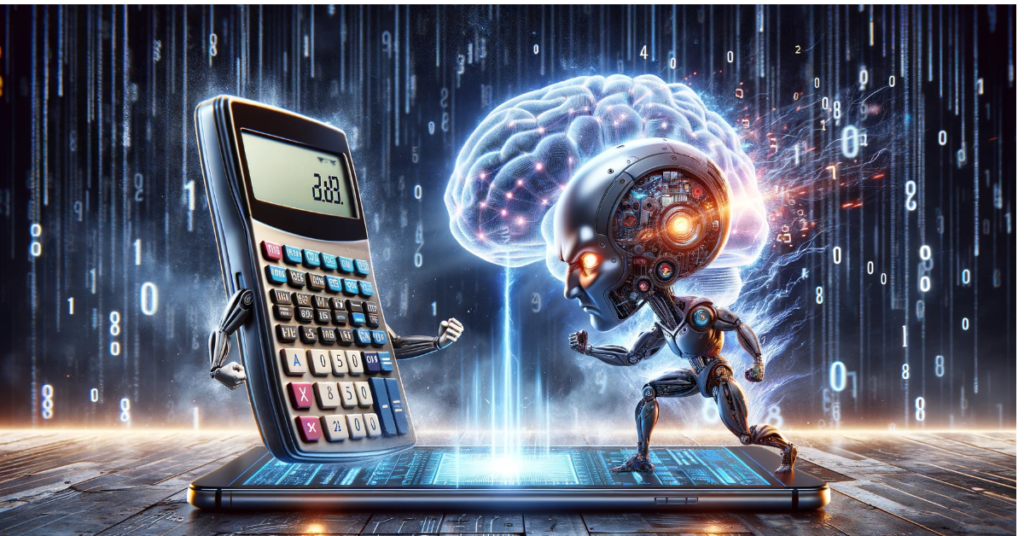
Artificial Intelligence is often misunderstood. Many people assume AI works like a calculator—input data, get an exact output. But this assumption is incorrect. AI is not like a calculator, and understanding this difference is crucial in today’s AI-driven world.A calculator follows fixed rules. AI, on the other hand, learns, adapts, and makes probabilistic decisions. In this article, we’ll explore five key reasons why AI operates very differently from a calculator and why this distinction matters for users, businesses, and the future of technology.
AI Learns, Calculators Only Follow Rules
A calculator is rule-based. Every operation produces the same result, every time. AI systems use machine learning models that improve over time. They analyze patterns, learn from data, and refine responses based on experience.AI Is Not Like a Calculator
Key difference:
Calculator: Fixed logic AI: Learns from data and feedback This learning ability proves that AI is not like a calculator in real-world applications.
AI Handles Uncertainty, Calculators Do Not
Calculators deal with absolute certainty. Two plus two will always equal four. AI works in uncertain environments. It predicts outcomes using probabilities rather than fixed answers. This is why AI can: Recommend content Detect spam Predict user behavior This decision-making intelligence allows AI to operate where calculators completely fai
A calculator doesn’t understand meaning. It simply processes numbers.AI can interpret contextual understanding, including language, tone, and intent. For example:AI understands natural languageAI detects sentiment in textAI adapts responses based on contextThis is powered by natural language processing, making AI far more flexible than basic computational tools.
AI Can Create, Calculators Cannot
A calculator cannot create anything new.AI can generate:Articles and summariesImages and designsCode and automation scriptsThis generative AI capability allows machines to assist in creative tasks—something calculators were never designed to do.That creative ability is another strong reason AI is not like a calculator.
Benefits of Understanding AI Correctly
AI Evolves with Data and TimeA calculator today will work the same way ten years from now.AI systems evolve continuously. As data grows, AI becomes:More accurateMore personalizedMore efficientThis adaptive intelligence is what makes AI scalable for industries like healthcare, finance, marketing, and education.Benefits of Understanding AI CorrectlyKnowing how AI truly works helps you:Use AI tools more effectivelyAvoid unrealistic expectationsMake better tech decisionsUnderstanding that AI is not like a calculator improves trust and adoption.
Pros & Cons of AI Compared to Calculators
✅ Pros
Learns from data Handles complex problems Works in uncertain environments
❌ Cons
Can make mistakes
Requires quality data
Not always transparent
FAQs
Why is AI not like a calculator? AI learns from data and adapts over time, while calculators only follow fixed rules. Can AI replace calculators? No. Calculators are better for exact math, while AI is suited for complex reasoning. Does AI always give correct answers? No. AI provides probabilistic responses, not guaranteed results. Is AI intelligent like humans? AI mimics intelligence but does not possess human consciousness. Where is AI better than calculators? In language processing, predictions, automation, and creative tasks.
Conclusion
AI is powerful, flexible, and evolving—but it is not a calculator. Calculators compute; AI reasons, learns, and adapts. Understanding this difference helps users unlock AI’s true potential without misunderstanding its limitations.If you want to use AI wisely, remember one thing: AI is not like a calculator—it’s a learning system.